
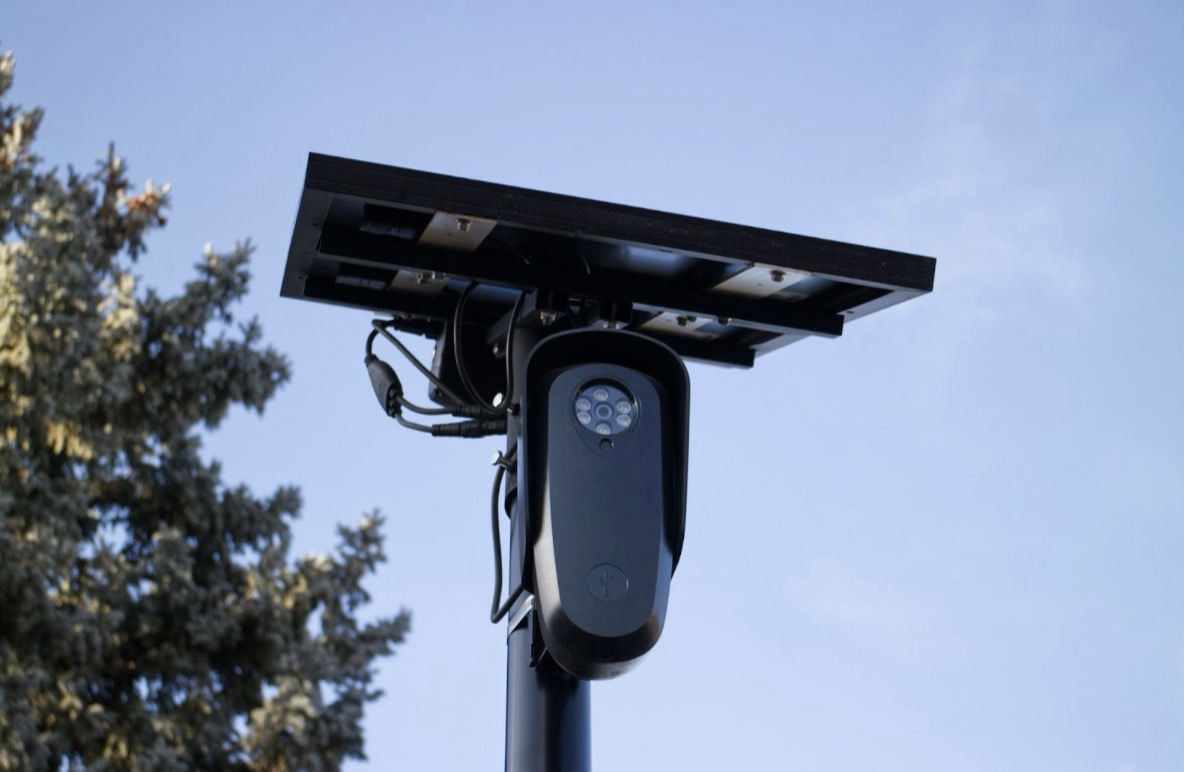
If you drive anywhere on public roads, especially in Colorado, I’m sure you have seen this mysterious black pole with a solar panel and a small black module attached. You were probably thinking, “That’s way too small to be a speed camera.” You would be right, this is actually a $3,000 Automatic License Plate Reader from a company called Flock.
These cameras have been the center of a lot of recent controversy, especially with the Trump administration’s recent immigration crackdown. Specifically in Denver, Colorado, city officials have terminated their contract with Flock and decided to replace all cameras with a competitor, Axon, known primarily for their police body-worn cameras. This was done in alignment with the city’s sanctuary policies, which prohibit cooperation with immigration officials.
Flock’s national network, which connects their 90,000 cameras, has been a key player in locating undocumented immigrants by Immigration and Customs Enforcement (ICE). After a 2025 review of access logs by the City of Denver, they discovered that ICE accessed the cameras more than 1,400 times since July 2024. The Mav asked Flock via email for an interview about the usage of the cameras, but Flock declined our request.
Another major criticism of these cameras is the burden of cost passed down to taxpayers. After filing an open records request with the City of Firestone, we discovered that in April of 2024, the city paid a combined $50,600 for “Flock Safety Falcon”, “Professional Services – Standard Implementation Fee”, and “Professional Services – Existing Infrastructure Implementation Fee.” This is a substantial amount of money for only 14 cameras. It continues into 2025, with the City of Firestone paying $42,000. On Firestone’s Flock transparency portal, it shows that 199,240 vehicles were detected in the past 30 days. The Mav also emailed the Deputy Chief of Police, Bryce Borders, with a request for an interview. After giving him a list of potential questions, he did not respond.
For the City of Longmont, they didn’t provide us with the 2024 payment info, but from their 2023 invoice, we can see they paid $37,500 for “Flock Safety Falcon”, and $5,250 for “Professional Services – Standard Fee Implementation”. For 2024, it was pretty much the same at $45,000 for “Flock Safety LPR”. These fees all have a quantity of 15. Although differing from Firestone’s payments to Flock, Longmont also paid $2,500 in 2023 and 2025 for “Flock Safety Advanced Search”. The advanced search feature collects more data other than just the license plate number, like color, make, model, etc. From examining Longmont’s transparency portal, we can also see that 425,082 cars were scanned in the past 30 days. Additionally, the Mav did reach out to Colin Jessen, a Sergeant with the Longmont Police Department, but he also did not respond to our request for an interview.
Cases of alleged misuse of Flock cameras have risen over recent years. One recent investigation is from the Thornton Police Department in Thornton, Colorado. After a recent request for an ethics investigation from a citizen activist group stemming from the high amount of searches on the website, “Have I Been Flocked?”, by a user called “D.McT”. The activist group has claimed that a Thornton Officer ran over 20,000 searches from October 2023 to December 2025.
A more severe example of a citizen being wrongly accused of a crime solely based on Flock camera data is the case of Chrisanna Elser. A sergeant from the Columbine Valley Police Department in Colorado knocked on Elser’s door, claiming she stole a package from a nearby neighborhood. He claimed that the cameras caught her going into the neighborhood 20 times over the last month. He ended the conversation by issuing her a summons to appear in court. This case demonstrates the debate over the legality of these cameras. One effort to protect rights is being made in the Colorado Senate with SB26-070. This bill would place restrictions on access to license plate reader data. Requiring a warrant for data over 72 hours old, and data would have to be deleted within 30 days.
The high costs associated with these cameras and the growing debate over legality and privacy concerns have led to cities turning to alternatives. Especially in sanctuary cities like Denver, Colorado, after discovering that their ALPR data was being shared with Immigration and Customs Enforcement (ICE).
Overall, data privacy concerns and misuse of public information systems (PIS) have dramatically increased over recent years, and raise many questions if temporary security is worth the permanent relinquishment of constitutional rights.







Payton Grasser • May 5, 2026 at 9:38 am
Very frustrating that no one wanted to be interviewed. It makes it seem like something is being hidden, but great job doing the digging Andrew!!
Lorelei • May 5, 2026 at 9:34 am
How do the cameras catch undocumented immigrants if they are just scanning license plates?