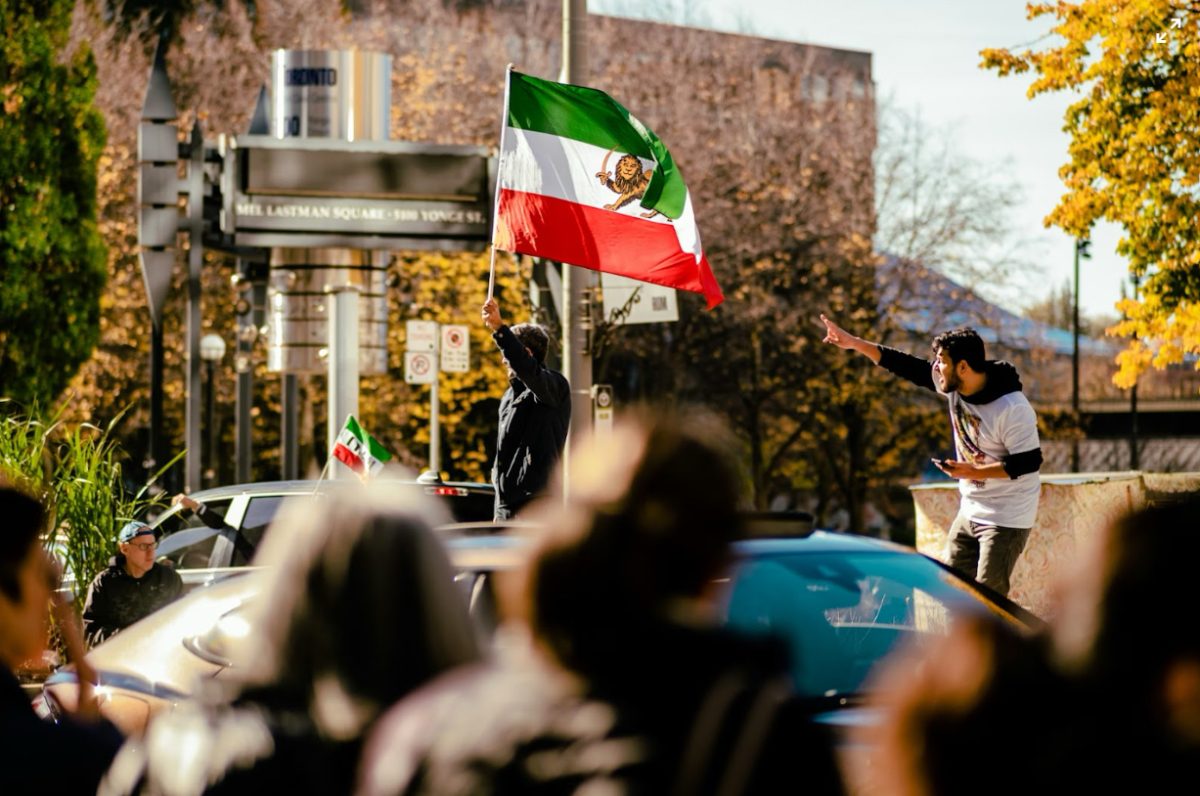
Just this last week, millions of people in 512 locations, 180 cities, and in every province of the Islamic Republic of Iran were taking to the streets, protesting and fighting the government. Brought about by economic turmoil caused by sanctions, economic mismanagement, and the authoritarian measures that the nation has imposed, the Iranian people have had enough. Using methods such as street protests, riots, and strikes, it is clear that the situation in Iran is complex, so how can sense be made of it?
As with all things, the first step to understanding the present is understanding the past. In 1979, the Iranian Revolution exiled Mohammad Reza Pahlavi, the last Shah of Iran. The revolution was started over discontent with the Shah’s government, believing it was not working towards the interests of the Iranian people. The revolutionary government persists to this day, but despite having the title of republic, most power is concentrated in the position of the Supreme Leader.
The Supreme Leader of Iran currently is Ali Hosseini Khamenei. Khamenei has served since 1989. He can issue decrees and make the final decisions on the government’s policies. A conservative hardliner and mass privateer, he would ultimately be responsible for maintaining the economy of Iran.
In 2024, Iran suffered a major economic crisis when inflation and currency devaluation hit record levels. Disruptions in energy infrastructure and the food market caused major price increases. Food prices rose 72%, while the nationwide inflation rate hit 42.2%. Following the Twelve-Day War in June, 2025, global sanctions on Iran were imposed once again, causing the Iranian rial to hit 48.6% inflation. This economic crisis led the shopkeepers and businessmen around the capital of Tehran to begin striking.
The strikes by shopkeepers and merchants on December 28, 2025, spread to other commercial stores around Tehran. Throughout the next two days, the protests spread around more of Tehran, to the point where reports state that increased security was necessary. Protests were initially dispersed by tear gas, then by force. Demonstrations spread throughout the country, with thousands and thousands of protests in several cities.
Dozens of groups and organizations began to strike and protest against the Iranian government, moving the goals of the protests from economic reforms to the complex overthrow of the Revolutionary Government. On December 31, reports came out that the Iranian forces had begun using live ammunition to quell the protests, with several hospitals stating they were receiving gunshot-wounded civilians.
By this time, the entire nation was protesting, where clashes were being reported by both sides. Live ammunition was used in the city of Lordegan, where several protesters, as well as a child, were killed. The first week of January would see the government release footage of forced confessions by protesters, while continuing the use of live ammunition on demonstrators.
By this point, the protests were growing by hundreds of thousands a day. On January 8, the Iranian government cut the internet for most of the country. However, reports still trickled in about the supposed piles of bodies of protesters. BBC Persia stated that protesters around the country were in violent conflict with government forces.
On January 14, the Kurdistan Freedom Party led an insurgency against the government. On that same day, the Iranian Human Rights Organization said that over 3000 protesters were killed, with over 10,000 being arrested. This became even darker when the Iranian head judiciary said that those arrested would be executed. CBS news stated that the death toll could be on a higher end of 20,000.
On January 15, Iran imposed a curfew nationwide, and since then there have been zero reported protests, and there have been reports of Iranians authorities arresting anyone related to the protesting. This is believed to be the end of the public protests, but it is unknown what the actual situation in Iran is.
The future of Iran is uncertain, protests of this scale rarely ever end up positively for the incumbent government, especially since the government had to resort to extreme measures such as a nationwide curfew and mass killings/arrests of protesters. The Iranian Hoi Polloi have mass discontent with their government. What is known is that the liberalization of Iran is a possibility in its future, which after the fall of Assad’s Regime in Syria in 2024 and the implementation of a transitional government, could lead to an eventual implementation of fully functioning democracy in the Middle East.