
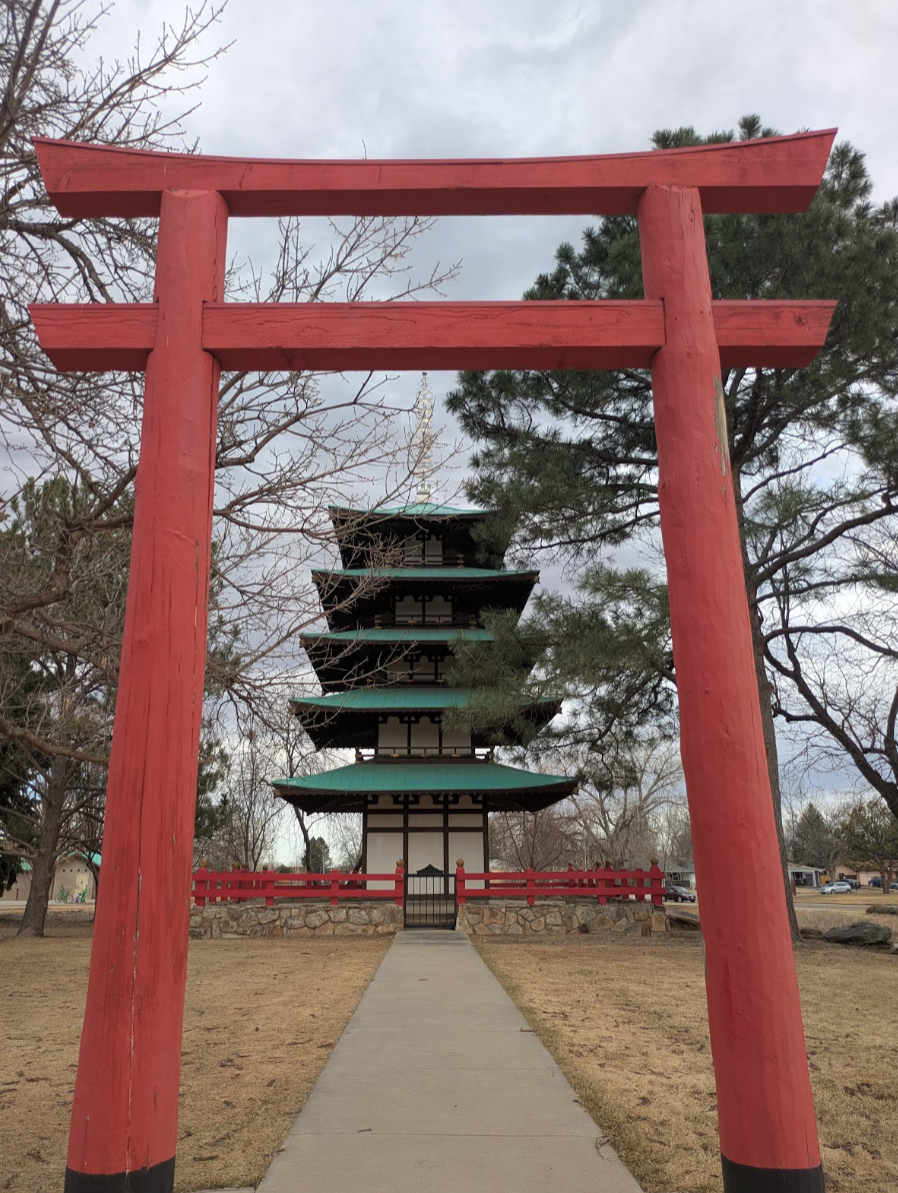
Kanemoto Park in Longmont, Colorado, is a beautiful representation of how compassionate communities who have nothing in common from around the world can come together to share understanding and unity.
Many of those who frequent Longmont will notice Kanemoto Park and its Tower of Compassion as they drive along. The quaint and humble looking Japanese-style building is out of place next to the busting western suburbs.
Despite its contrast, many will not stop to consider the symbolism and historical significance. One might think it exists to represent the significantly above average percentage of Japanese Americans in Longmont compared to Colorado (3.52% compared to 0.5%), however, that is not the case.
Kanemoto Park derives its name from the Kanemoto family, who are descended from Goroku Kanemoto, a Japanese immigrant who worked on the railroad going through Longmont that started farming the land around Southmoor Park in 1910. Goroku would farm beets and potatoes until eventually leasing his own farm in the area.
His family would grow to be essential members of the community of Longmont. Starting as farmers, George and James (also called Jimmie) would eventually become businessmen and philanthropists. They also became community leaders of their Buddhist church.
As the Kanemoto brothers grew older, they sold more and more land around their farm to the city of Longmont. Until 1966, they donated the rest of the land. In its place, the land became known as Kanemoto Park.
But what makes Kanemoto Park so special is its Tower of Compassion. Built in the style of a traditional Japanese Shinto Temple, it was donated by the Kanemoto Family to the people of Longmont as a symbol of gratitude and selflessness that the brothers embodied.
Another factor that makes it extraordinary is the fact that Longmont’s sister City, Chino, Japan, also donated substantially to the monument. You can see the individual donors on a plaque in the front of the monument.
Chino was established as Longmont’s sister City in May of 1990, and because of the Kanemoto family’s heritage from Japan, they were eager to help out. After the 2013 floods that destroyed the park, Chino even helped out again in the repairs.
The sister city relationship that Kanemoto Park represents makes the symbolism much more beautiful. People who have never met and have almost nothing in common will come together to build something great, something that represents compassion and generosity.
At the bottom of the tower, on the path right next to it, lies a second plaque:
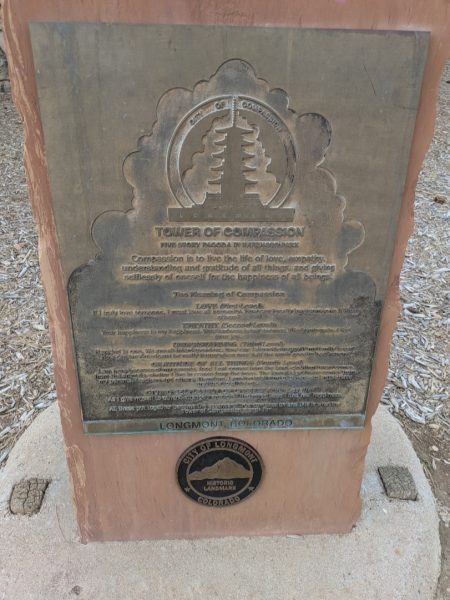
The plaque is an explanation of the five-story tower. Each level represents the meaning of compassion: Love, Empathy, Understanding, Gratitude of all Things, and Giving Selflessly of Oneself. The plaque reads out like a prayer, or as if the tower itself is talking to you, which makes it feel personal and a direct call to compassion.
The Kanemoto Park and its Tower of Compassion represents so much: from the ideals of compassion and gratitude and generosity, to a symbol of how hard work, philanthropy, and involvement within a community can bring success that will be passed down for generations. The tower contains many life lessons that I believe we all can learn from and keep in our minds as we go about our lives. I highly encourage a visit for everyone.















Patric Wallis • Apr 10, 2026 at 8:50 pm
This is SO cool. I’ve been here before, but I didn’t know the rich history behind it. So neat!